Unified Asset Onboarding
Connect multi-brand inverters, combiner boxes, and weather stations into a unified device model and acquisition protocol, giving you a single view of the full asset fleet.
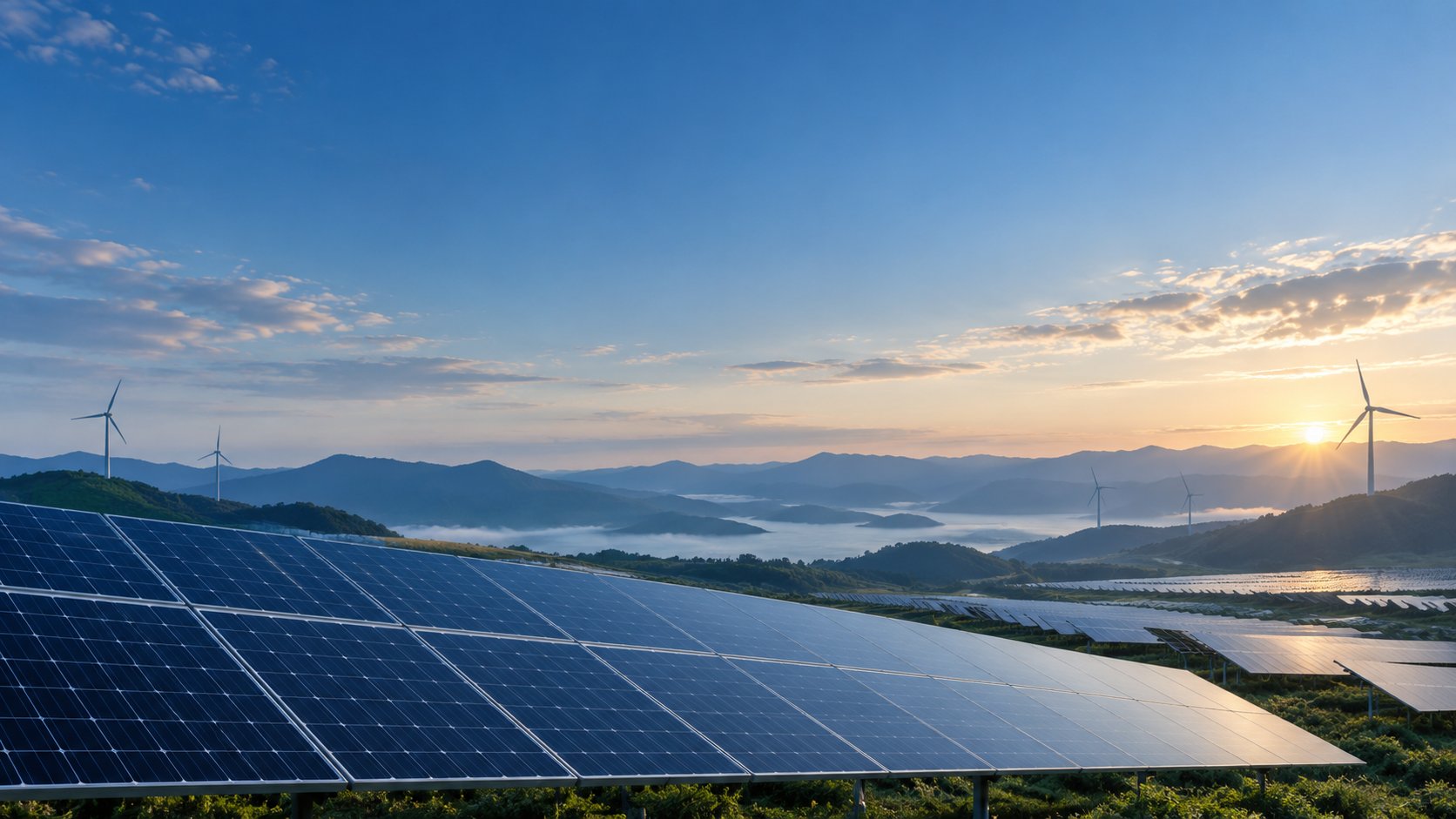
Make distributed PV assets visible, controllable, and accountable — continuously improving green-power self-consumption and operational efficiency.
PV System Operations brings distributed PV assets scattered across rooftops, ground mounts, and commercial and industrial sites into a unified, operable digital foundation. Centered on generation forecasting, intelligent O&M, and green-power self-consumption, we help asset owners put clean electricity to real use and keep operational returns accountable — from a single string to an entire plant, everything stays under continuous sensing and optimization.
You can access our live product →Build operable digitalization capability around the onboarding, sensing, optimization, and accounting of clean-energy assets.
Connect multi-brand inverters, combiner boxes, and weather stations into a unified device model and acquisition protocol, giving you a single view of the full asset fleet.
Monitor generation power, module temperatures, device status, and operational alarms in real time — from a single string to the whole plant, the generation picture is always at your command.
Combining weather, irradiance, and historical generation data, deliver multi-horizon output forecasts that inform dispatching, trading, and green-power self-consumption decisions.
Working with load curves and tariff signals, automatically optimize self-use and surplus-feed strategies to keep more green power inside the park and where it matters most.
Auto-generate inspection and work orders from device health and alarms, quickly locate faulty strings, and shift O&M from reactive repair to proactive prevention.
Account for green-power revenue, subsidies, and emission reductions by site and time window, building traceable operational ledgers and carbon-asset registers so every kilowatt-hour is clearly accounted for.
Build a digitalization foundation that supports operable PV assets in layers — from edge ingestion to operations applications.
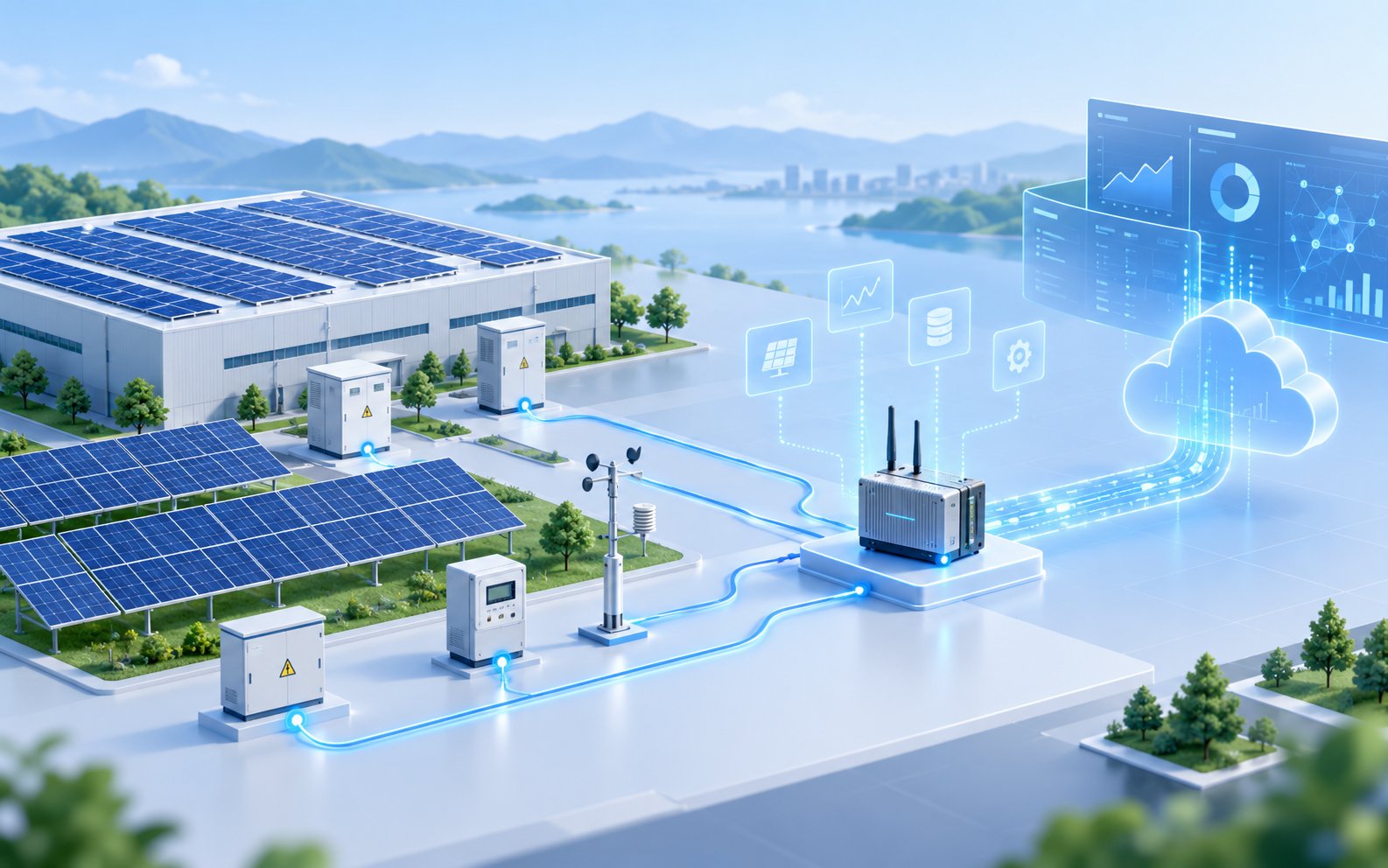
Connect edge devices such as inverters, combiner boxes, weather stations, and meters; unify protocol parsing and device modeling with second-level collection and breakpoint resumption to ensure complete and reliable source-end data.
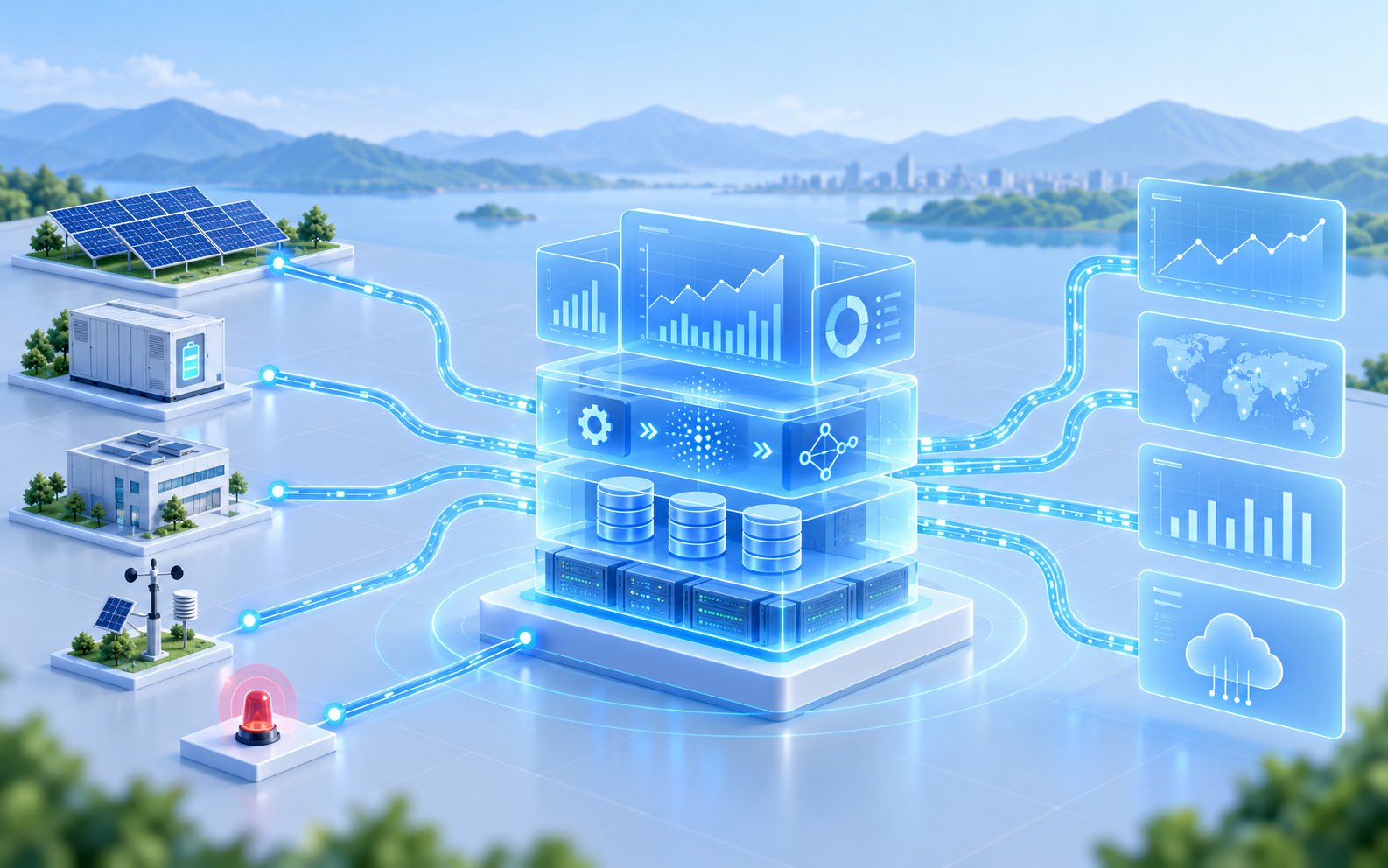
Aggregate multi-source data on generation, load, environment, and alarms to provide time-series storage, cleansing, and computation plus unified data services — a consistent data foundation for forecasting, optimization, and accounting applications.
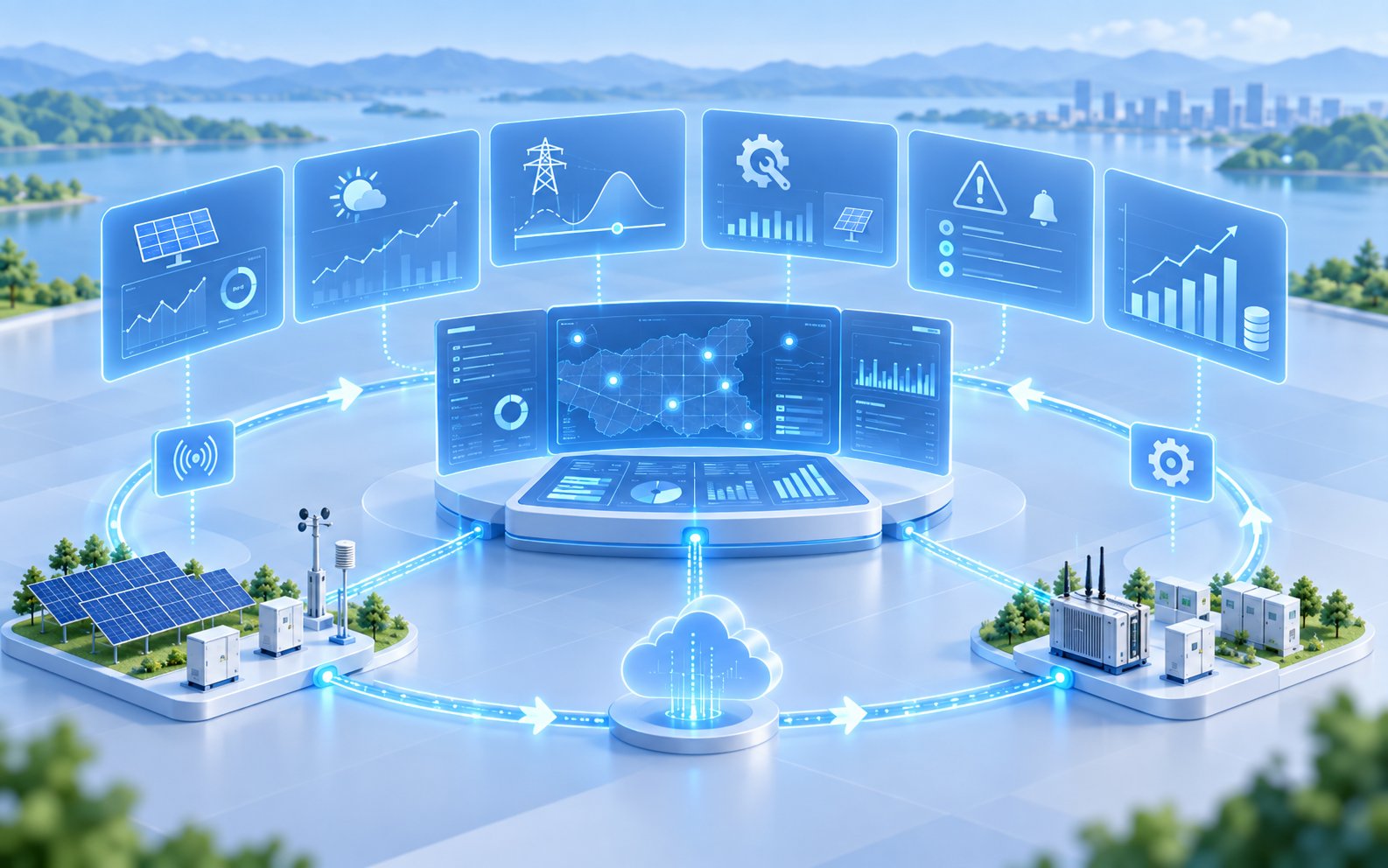
Deliver monitoring, forecasting, self-consumption optimization, intelligent O&M, and revenue accounting for plant operators, closing the loop from perception to decision and forming an end-to-end operations management cycle.
Demonstrate the real returns and efficiency gains brought by PV system operations through measurable operational metrics.
Connected Plant Scale
Average System Availability
Generation Forecast Accuracy
O&M Efficiency Gain
The above data is based on publicly available industry statistics and typical platform cases. Before official release, please use your company’s measured data.
Cover a wide range of typical operations scenarios, from park rooftops to centralized plants.
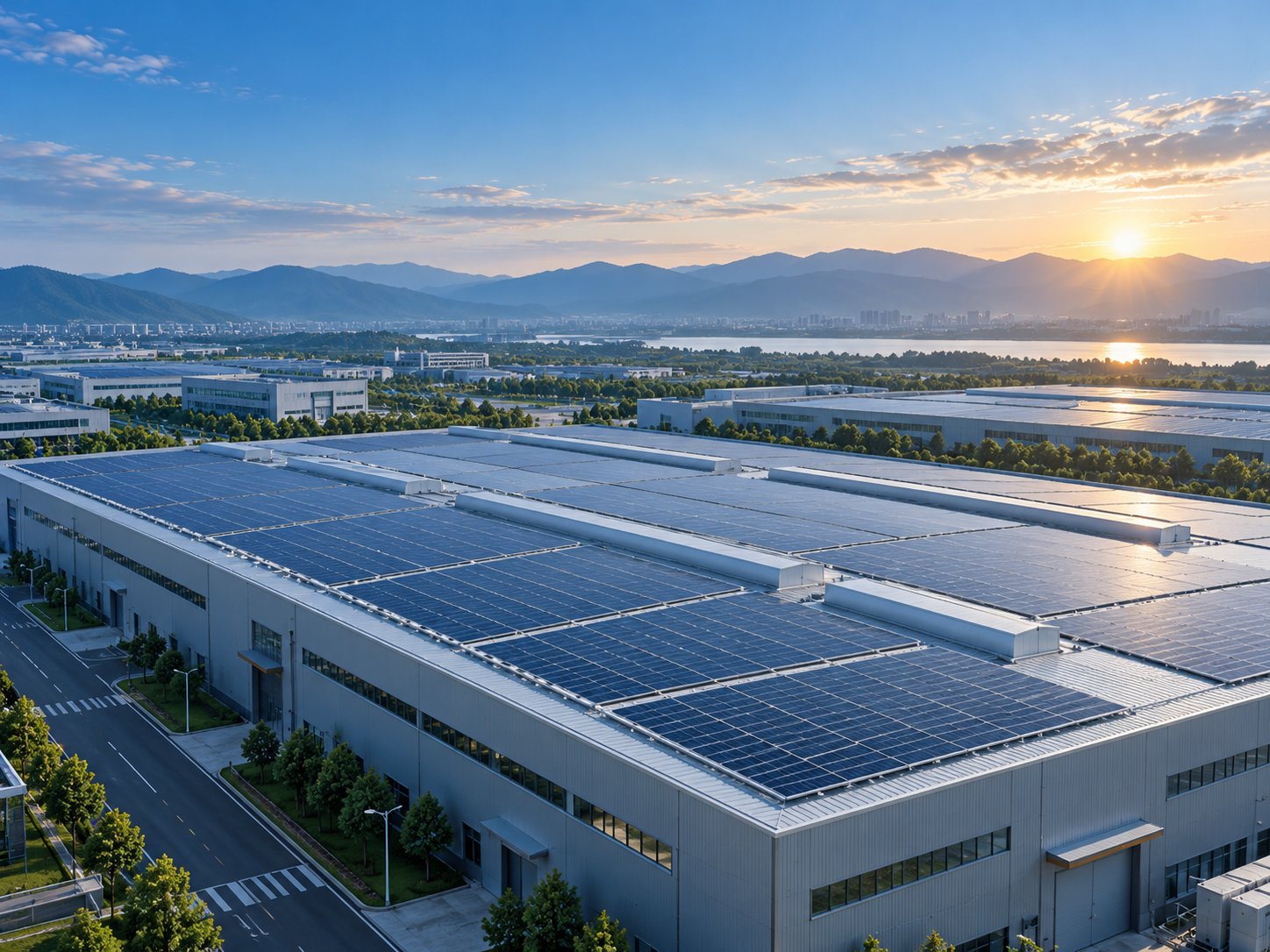
Centralized operations, self-consumption management, and green-power self-use for factory and park rooftops — turning idle roofs into a steady revenue source.
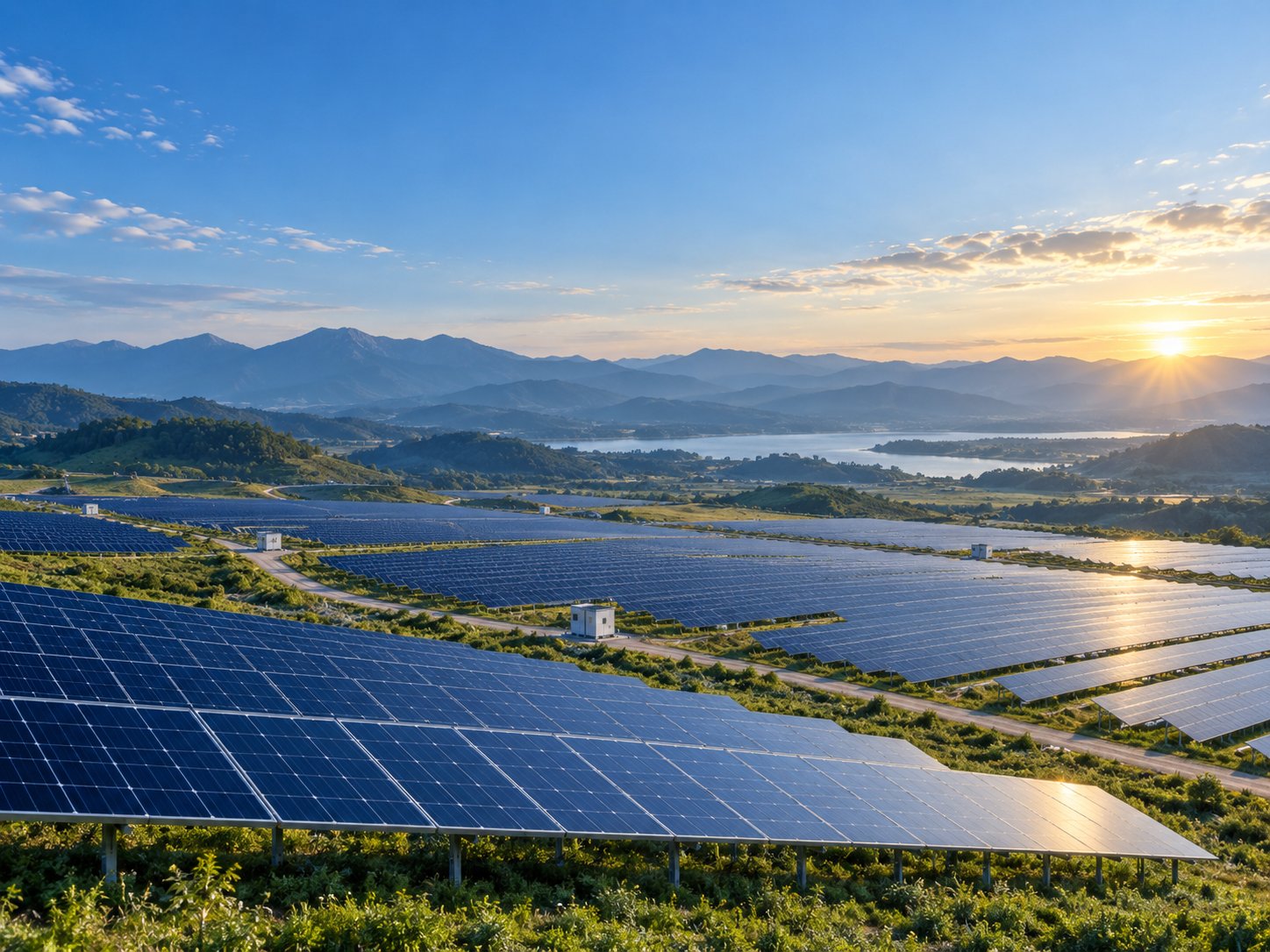
Remote monitoring, power forecasting, and generation management for centralized plants — running reliably with minimal staffing.
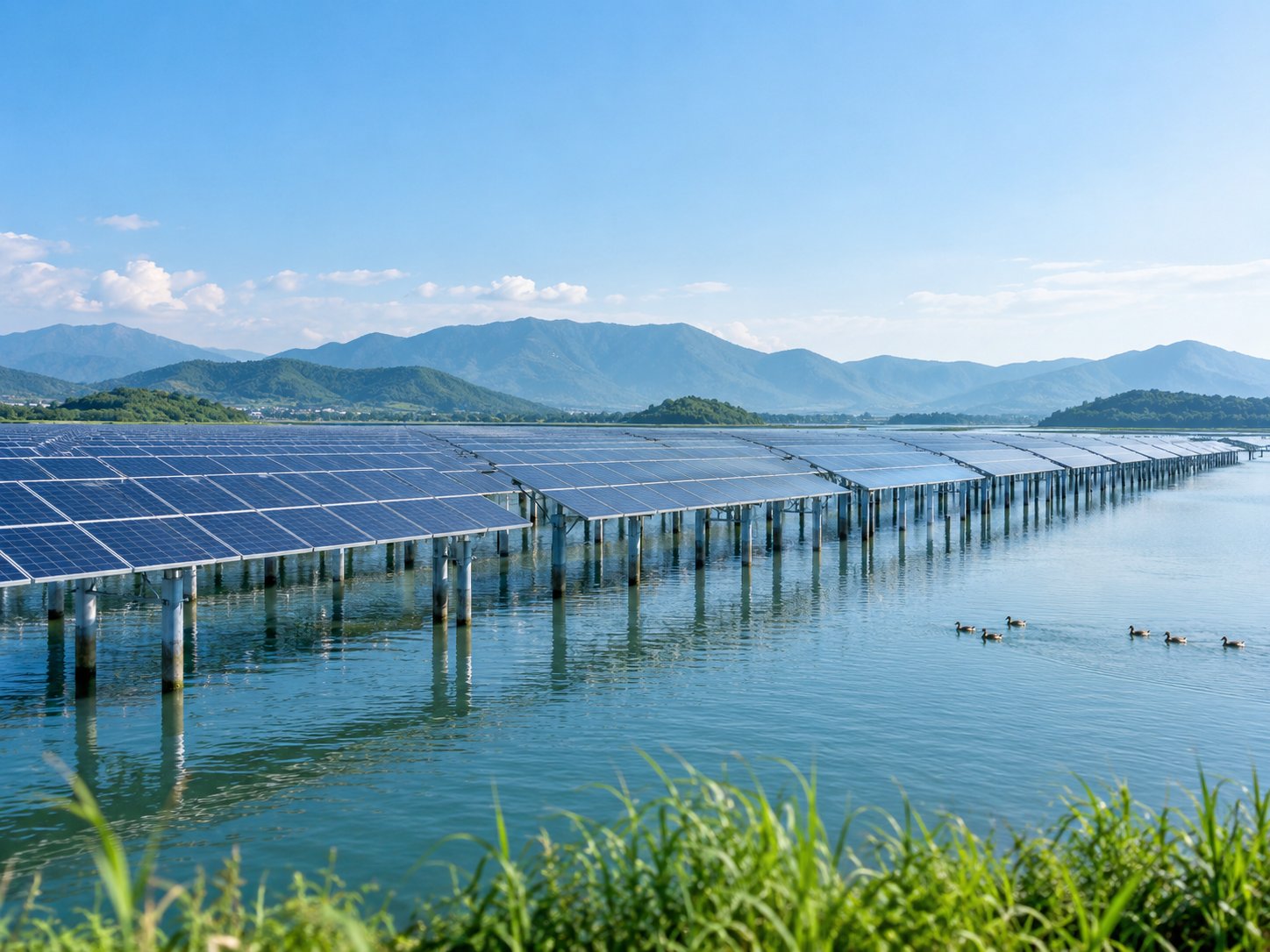
Zoned monitoring, generation coordination, and ecological-metric collection in co-use scenarios, balancing generation with land value.
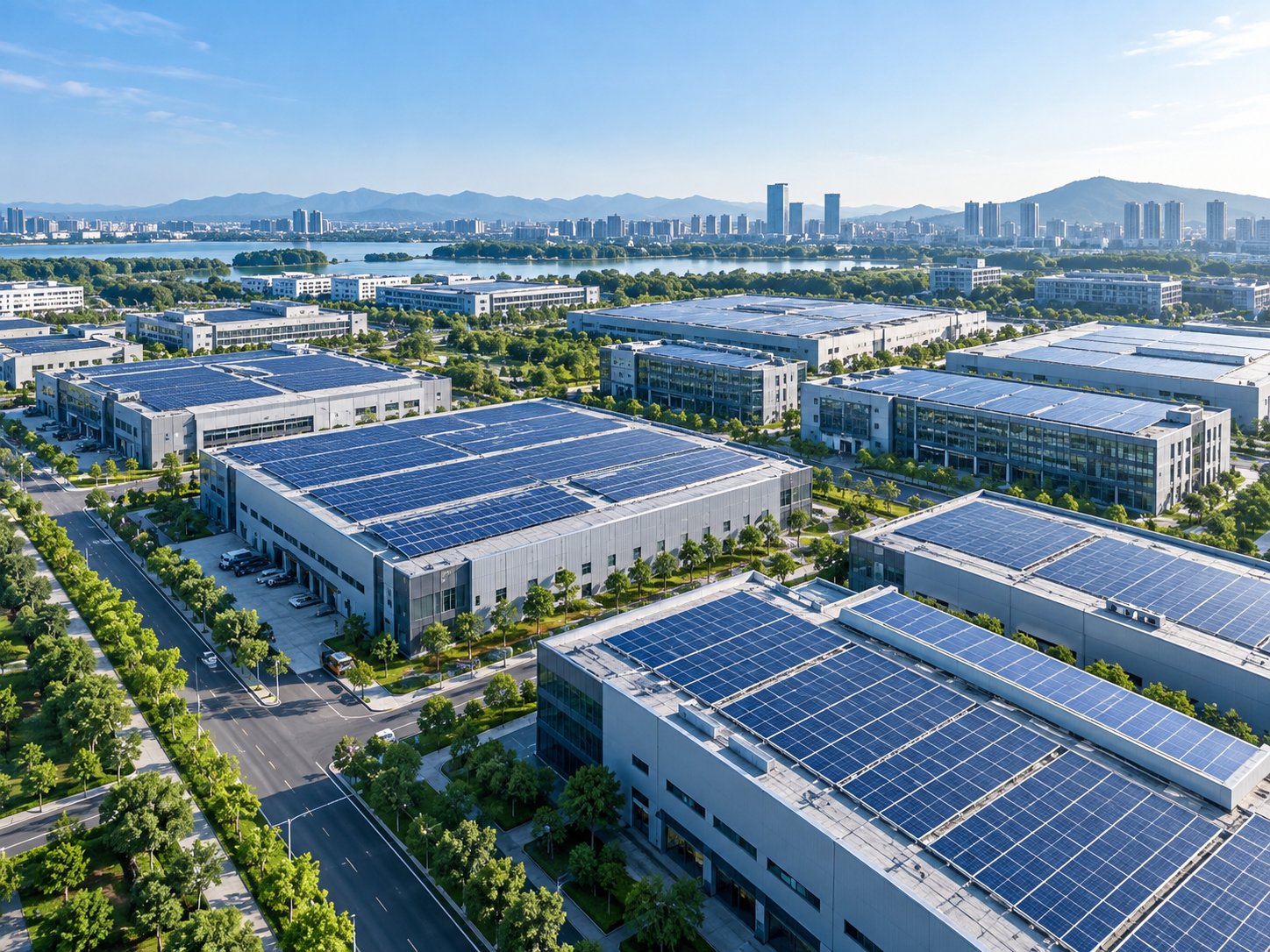
Aggregate multi-point distributed resources to support green-power trading and virtual-power-plant access, letting scattered assets join a larger market.
Yes, and you should. A plant at acceptance cares about the asset ledger, grid-connection paperwork, and traceable runtime data; a legacy plant cares about consolidating scattered manual readings and cutting labor. The platform manages both on one plant–inverter–string model, with new plants via standard onboarding and legacy via retrofit onboarding under a unified O&M view. As long as there is readable metering or communication on site, legacy plants usually need no hardware change; one survey confirms the onboarding scope.
Do not rush it. Forecasting only matters once data is stable and the weather source is reliable; otherwise it is just another curve that will be wrong. Get onboarding and reconciliation running cleanly first, make generation, device-status, and tariff data trustworthy, then layer short-term forecasting on top for storage coordination and curtailment alerts. Forecasting is a decision aid, not a launch prerequisite.
Use a hierarchical model to aggregate scattered sites into one view, but do not force every site onto the same workflow from day one. The group sees global generation and revenue; regional teams only handle their own alarms and work orders, with permissions split by organization. That gives HQ control without burying sites under HQ process. Cross-region definition drift is converged at onboarding through unified device IDs and metric definitions.
Book a 30-minute consultation to map your current assets, business goals and a practical digitalization roadmap.