Smart Park IBMS

Bring a park’s spaces, devices, and operations into one platform, making multi-system management more visible, controllable, and traceable.

Overview

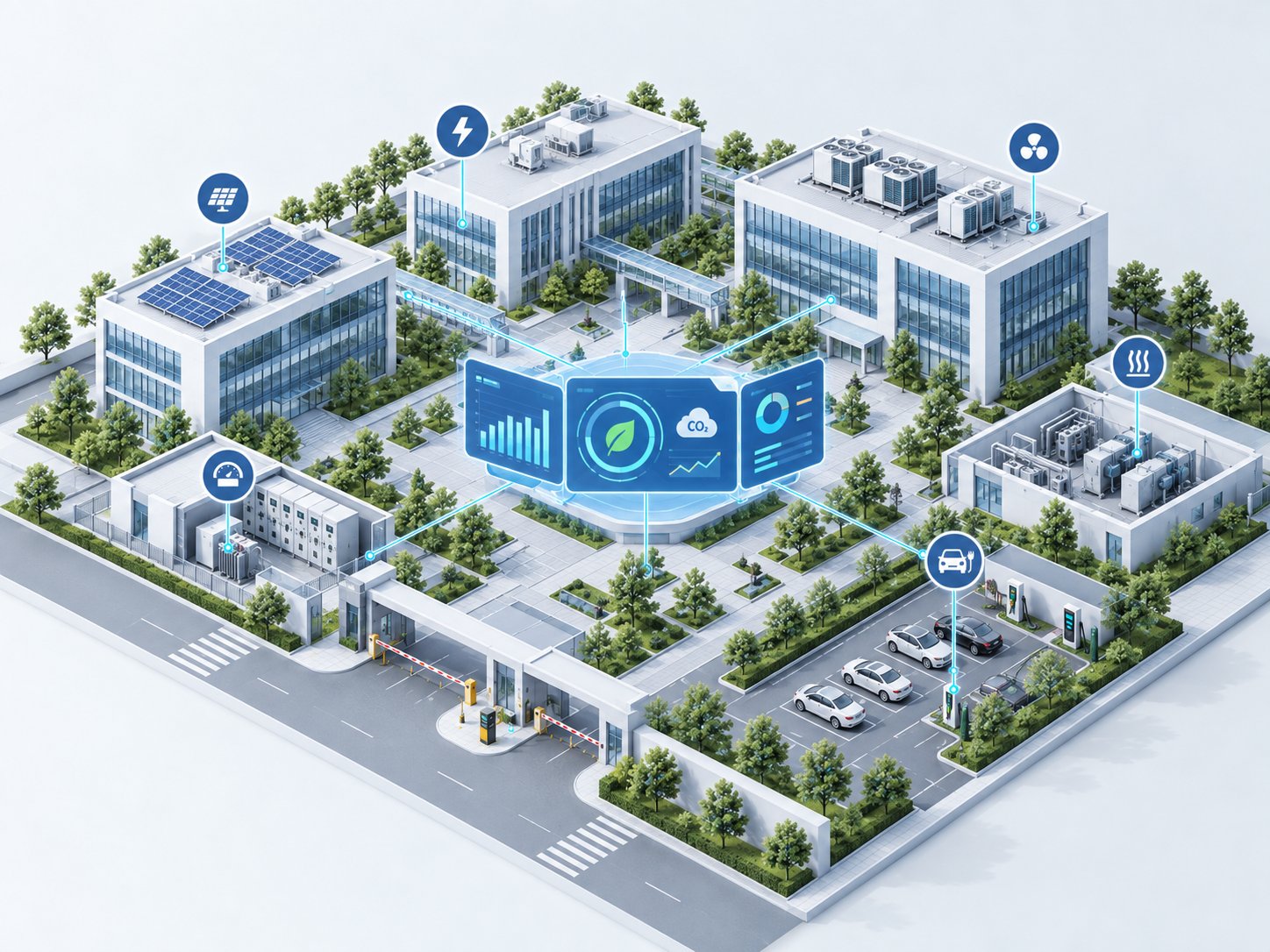
Smart Park IBMS targets parks with multiple legacy systems, bringing HVAC, access control, alarms, parking, energy consumption, and energy & carbon into one control framework. A digital-twin 3D view presents park spaces and device status, while a back-office system handles daily work such as alarms, work orders, permissions, and access — so operators never have to switch back and forth between multiple systems from issue discovery to accountability.

Core Capabilities

Build unified-control capability of digital-twin and back-office collaboration around the integrated integration of a park’s multiple subsystems.

01

Unified Multi-System Integration

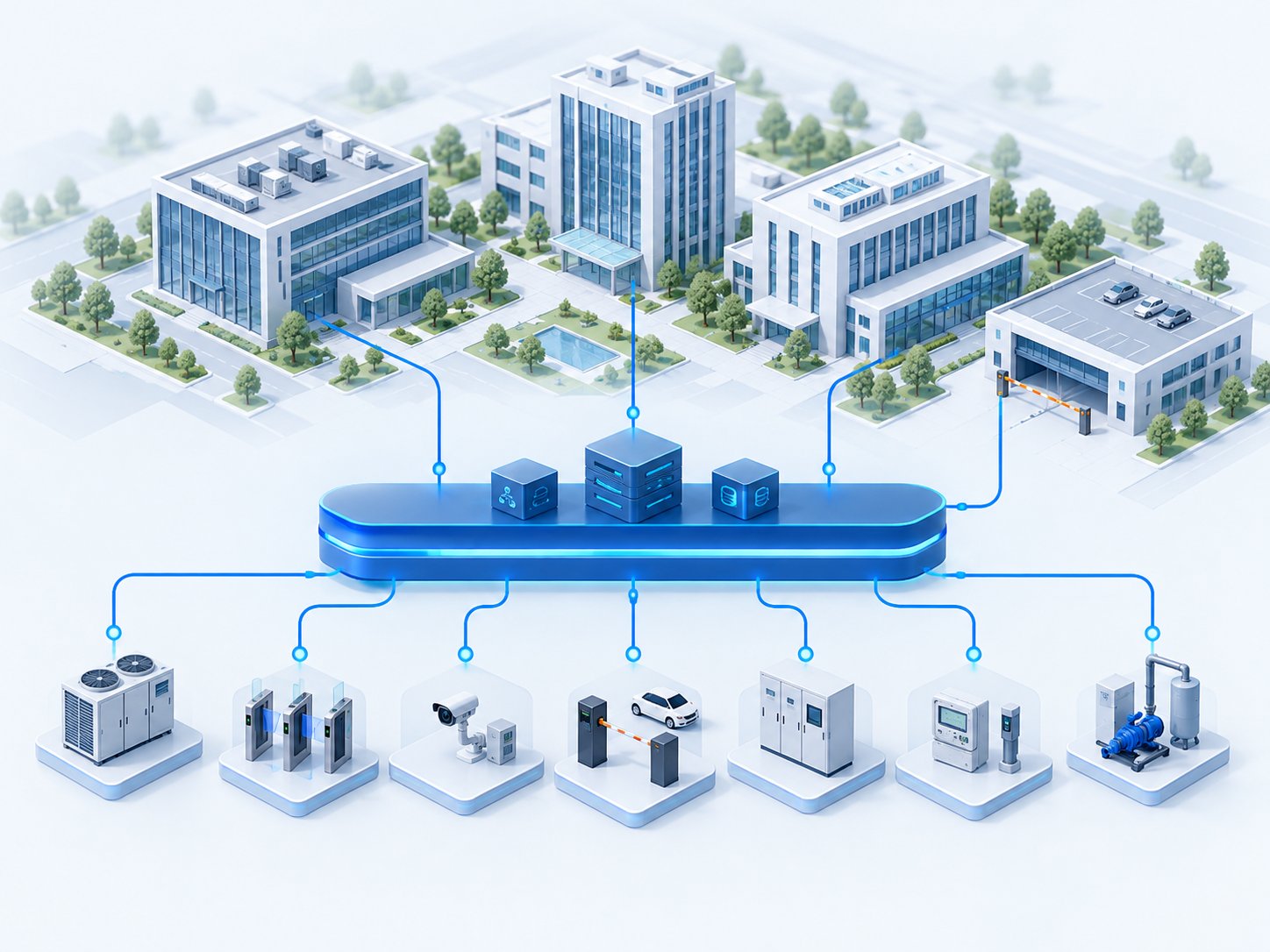
Through a unified integration bus, connect heterogeneous subsystems — HVAC, access control, alarms, parking, energy & carbon, energy consumption, energy — completing protocol adaptation and device modeling to eliminate system silos and manage the whole-park asset in one place.
02

Digital-Twin 3D Visualization

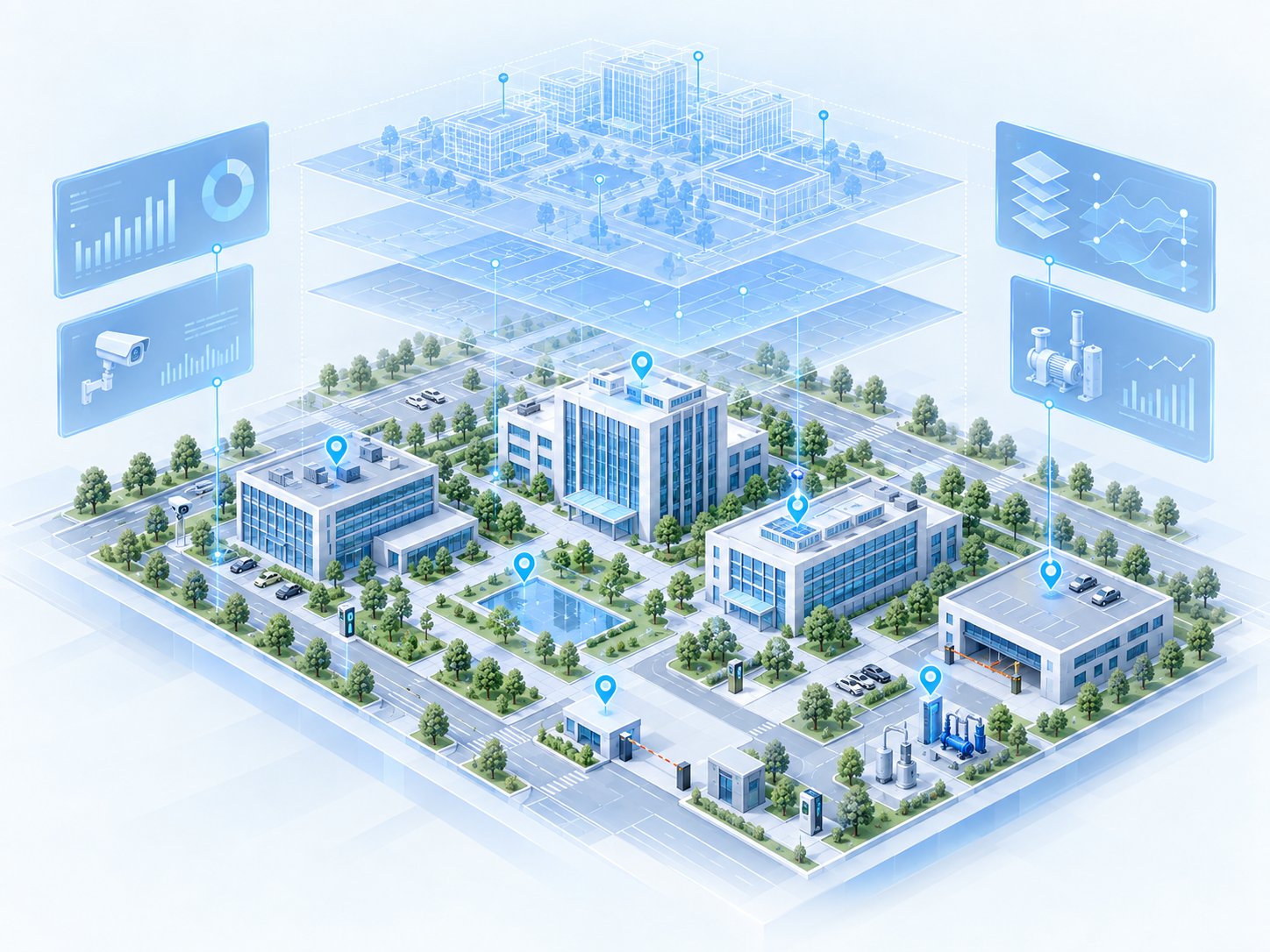
Reconstruct park buildings, devices, and pipelines into an interactive 3D scene; click any device to drill down into real-time status, operating parameters, and alarms — moving management from flat reports to spatial visualization.

03

Unified Alarms & Linkage

Aggregate alarms and events from every subsystem, with unified grading, deduplication, and linked handling — receive in one place, close the loop in one place, avoiding missed or mishandled items from constant system switching.

04

Back-Office Operations

Carry daily operations — work orders, inspections, permissions, visitors, parking, and device archives — turning the anomalies in the 3D scene into an executable operations loop.

05

Energy & Carbon and Consumption Management

Connect energy-consumption collection, efficiency analysis, and carbon accounting to turn scattered energy data into monitorable, optimizable energy & carbon assets, supporting the park’s dual-carbon goals.

06

Tiered Permissions & Organization

Support group, park, and building-level organizational structures and role permissions, meeting collaborative operations and sensitive-data security under multi-entity, multi-tier setups.

Capability Specs

Integration Scope

  • Covering energy (electricity, water, gas), HVAC, lighting, elevators, fire protection, and security systems
  • Onboarding of existing third-party systems, avoiding duplicated investment
  • Unified asset ledger and coding scheme for consistent device definitions across systems
  • Multi-level spatial and device hierarchy by park, building, floor, and room

Data Collection & Governance

  • Multi-protocol adaptation supporting mainstream communication methods and vendor devices
  • Edge preprocessing and caching — no data loss under unstable or lost connectivity
  • Data standardization and unified modeling for comparable, usable cross-system data
  • Data-quality monitoring and anomaly alerts ensuring trustworthiness

Monitoring & Visualization

  • Park-wide situation visualization with key metrics and system status on one screen
  • 3D digital-twin scene carrying device location and spatial relationships
  • Per-system views and drill-down from park overview to single-device detail
  • Large-screen and mobile multi-terminal delivery for both management and inspection

Alarm & Maintenance Management

  • Unified alarm center receiving and grading alarms across systems
  • Alarms located to specific devices and locations, supporting dispatch and response
  • Closed-loop work-order management with traceability from intake to acceptance
  • Asset ledger and lifecycle management with traceable records and maintenance history

Energy & Cost Management

  • Sub-metering and energy aggregation by department, tenant, or cost center
  • Period-over-period energy analysis with early warnings on abnormal fluctuations
  • Energy-cost allocation and billing supporting internal accounting
  • Energy data supporting before/after comparison of efficiency retrofits

Security & Compliance

  • Fine-grained permissions assigning operations and data scope by role and organization
  • Audit logs for critical operations meeting internal-control and compliance review requirements
  • Encrypted data storage and transmission complying with park data-security requirements
  • Independent deployment and data self-custody on demand, adapting to compliance requirements

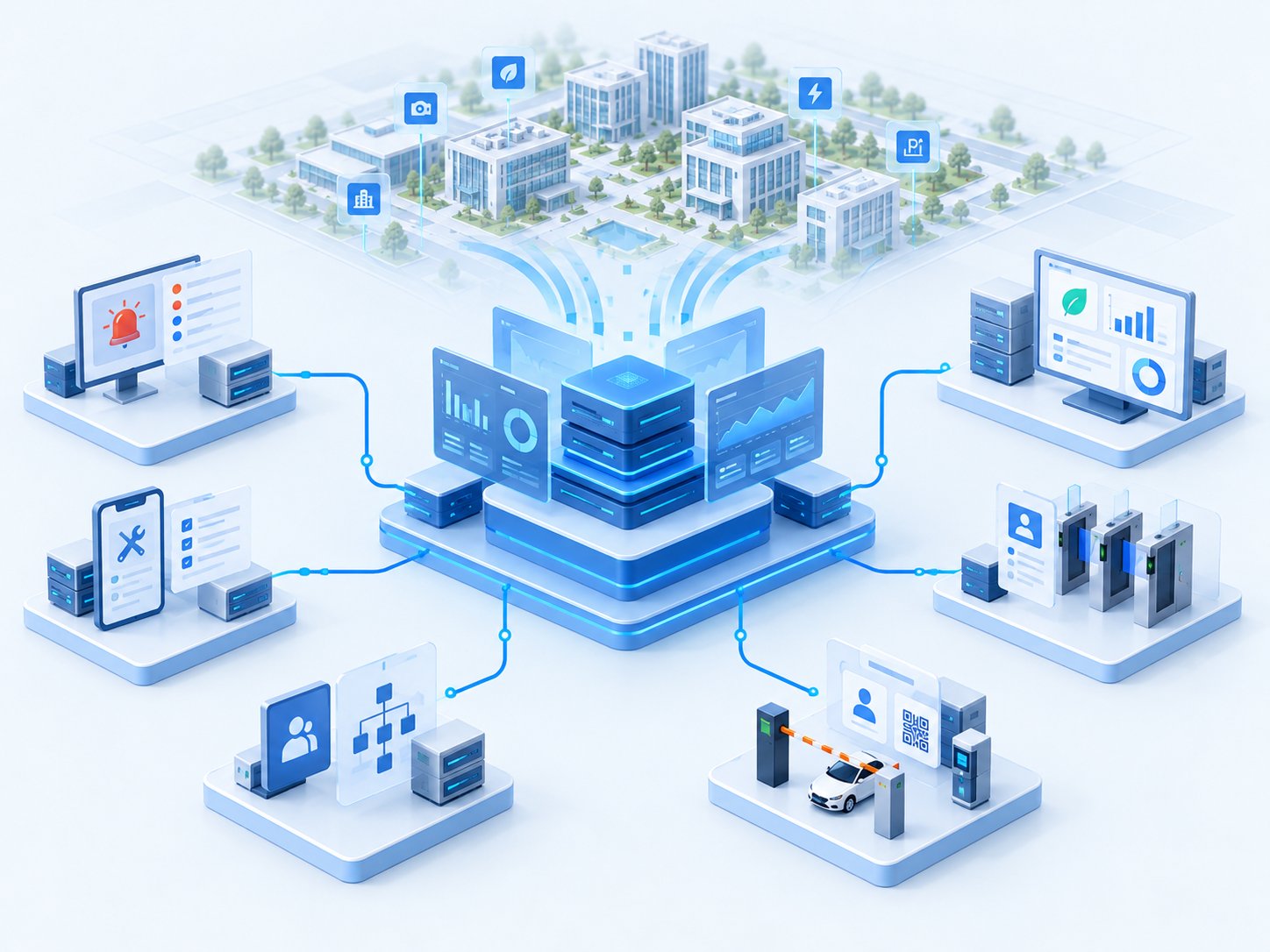
Integration Architecture

Build a digitalization foundation that supports unified control in layers — from integration bus to operations hub.

Integration Ingestion Bus

Integration Ingestion Bus

Connect heterogeneous subsystems — HVAC, access control, alarms, parking, energy & carbon, energy consumption, energy — with unified protocol parsing, device modeling, and data aggregation, forming the foundation of the platform’s integration capability.

Digital-Twin Engine

Digital-Twin Engine

Build the park’s 3D scene, carrying device drill-down, spatial positioning, and real-time data overlay, reconstructing buildings, devices, and operating status into one interactive space — the core of visualization.

Back-Office Operations Hub

Back-Office Operations Hub

Provide alarm handling, work-order operations, permission organization, access & parking, and carbon accounting, truly turning the status in the 3D scene into manageable business — the core of platform operations.

Application Scenarios

Cover a wide range of typical unified-control scenarios, from park integration to energy & carbon management.

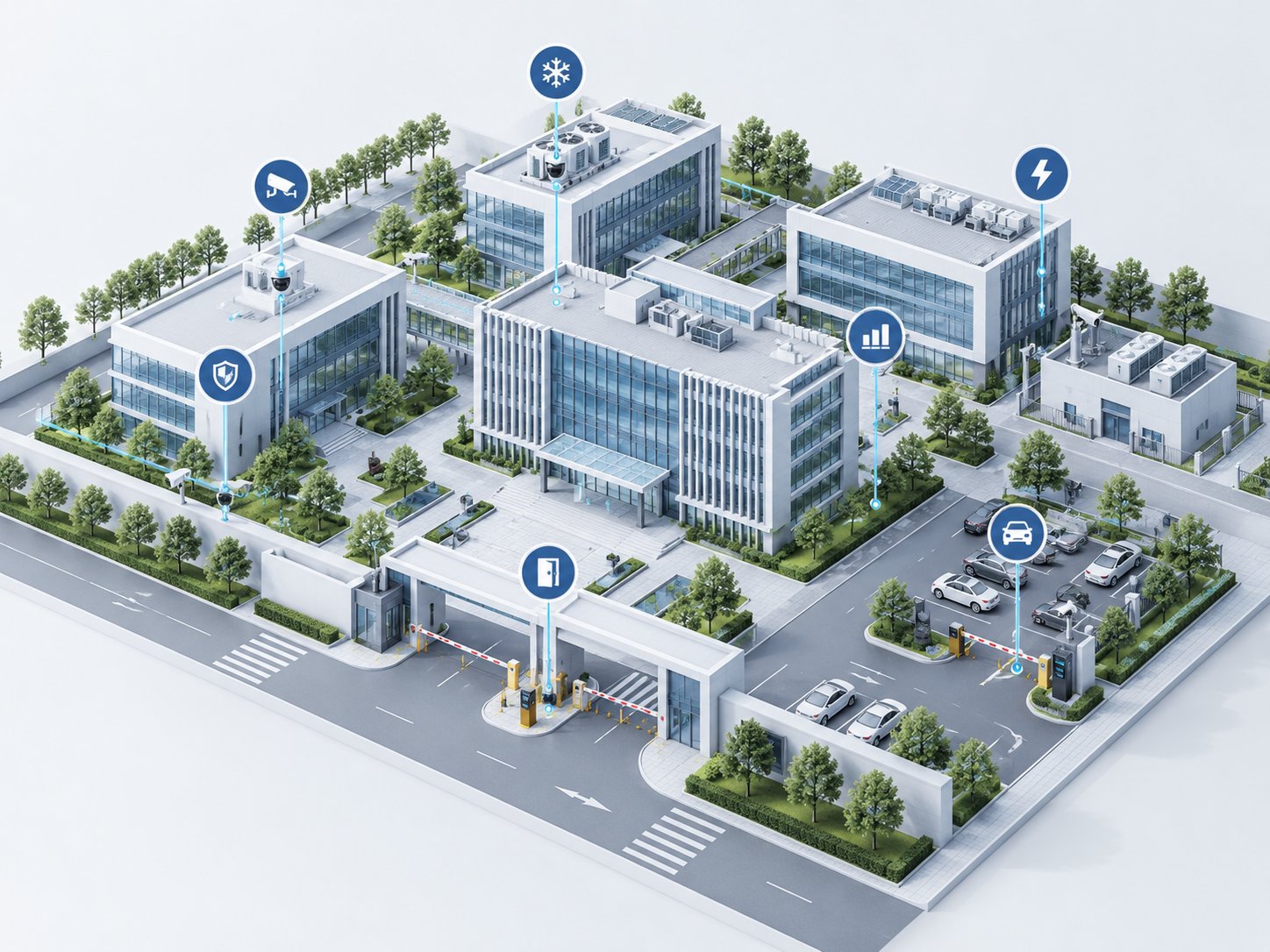
Smart-Park Integration

Smart-Park Integration

Unified integration and control of park-level HVAC, access control, alarms, parking, and more — one platform for the whole park.

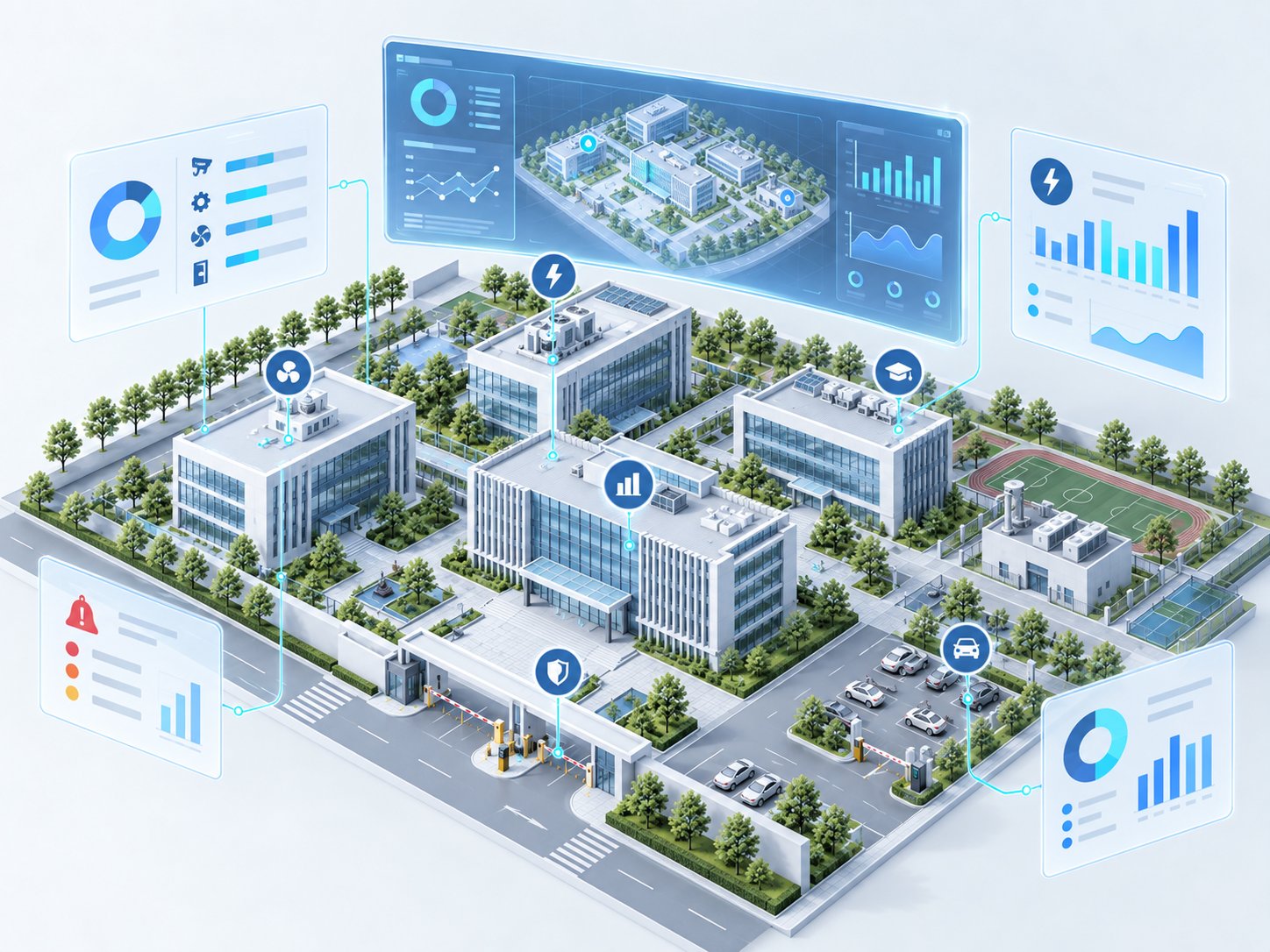
Digital-Twin Dashboard

Digital-Twin Dashboard

A 3D park big-screen displaying device status, energy consumption, and alarms in real time — management sees the full picture at a glance.

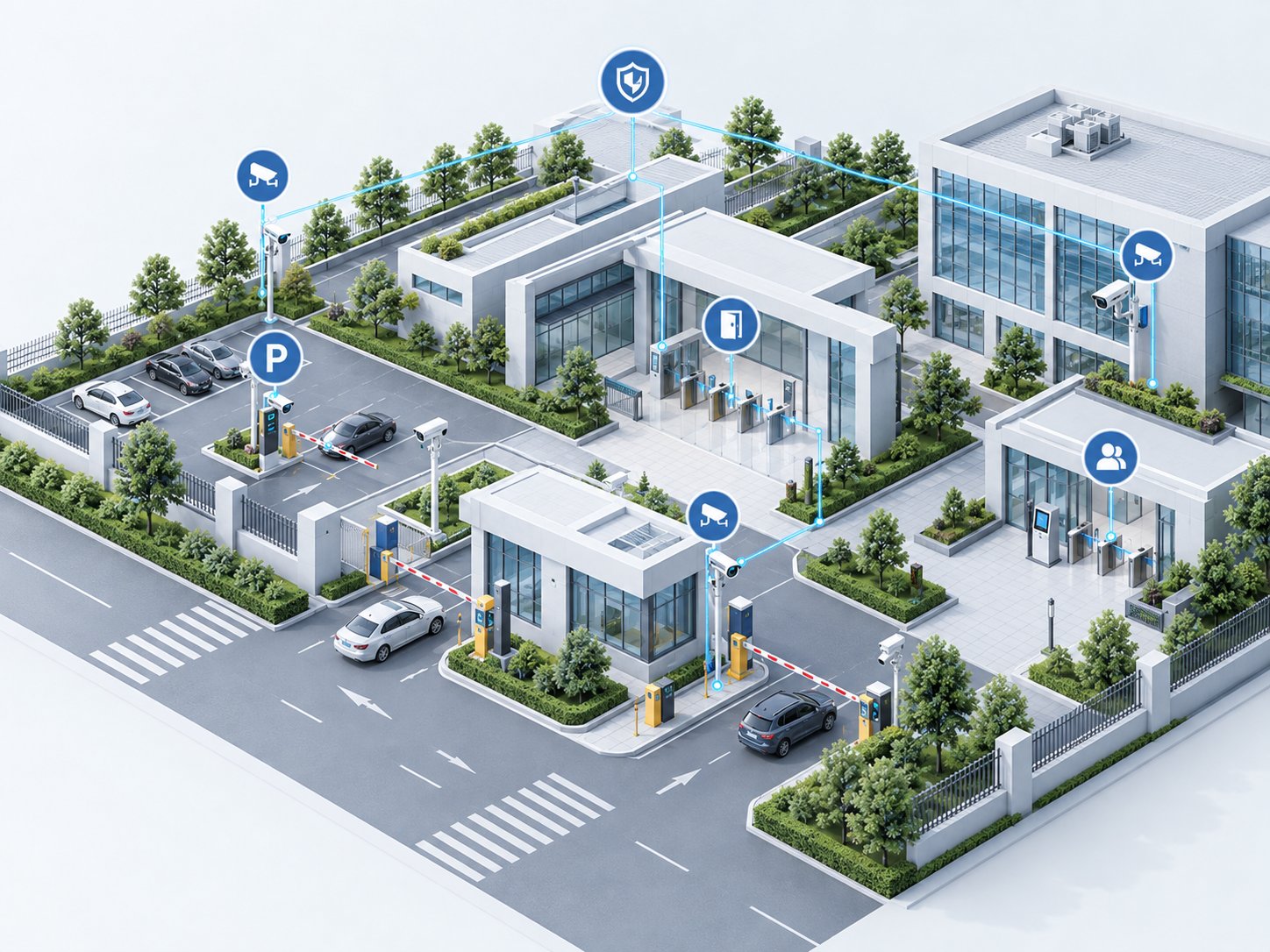
Security & Access

Security & Access

Integrated security and access management for access control, alarms, parking, and visitors, with event linkage and full traceability.

Energy & Carbon Integration

Energy & Carbon Integration

Connected management of energy consumption, energy, and carbon accounting, supporting park efficiency optimization and dual-carbon goal delivery.

Selection Guide

01

Subsystems already built — still need an IBMS?

Most parks do not lack systems, they lack integration; energy, security, and HVAC each run alone. The IBMS value is not rebuilding, but unifying existing systems so they coordinate. If you already suffer from data that will not reconcile and events that must be chained by hand, it is time; if each system works fine alone with no coordination need, hold off.

02

Is an IBMS the same as an energy management system?

No, scope differs. An energy system watches energy-medium operation and optimization; an IBMS does park-level integration, pulling energy, HVAC, security, lighting, elevators, and fire into one platform for unified monitoring and coordination. In practice they deploy together: energy gives analytical depth, IBMS gives the park-level entry point. Do not use one to replace the other.

03

Legacy systems with closed interfaces — will retrofit be a bottomless pit?

It depends on openness, not all of it must change. Systems with standard protocols or open interfaces integrate smoothly; fully closed undocumented legacy costs more, so leave it out or connect only what is connectable, in batches. Do a system survey early, assess each integration path, and fix the retrofit scope and priorities, far steadier than rolling out all at once.

04

Tenant-split park — how to settle energy clearly?

Map meters and circuits to tenant spaces and you can aggregate per tenant. For early buildings without independent metering, start from area or contract allocation with an adjustment mechanism, then switch to precise metering once conditions improve. The key is locking the definition with finance before implementation; the platform bills by configuration and can switch smoothly later.

Turn your energy business into a sustainable operating capability

Book a 30-minute consultation to map your current assets, business goals and a practical digitalization roadmap.